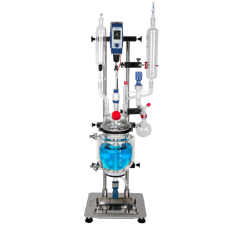
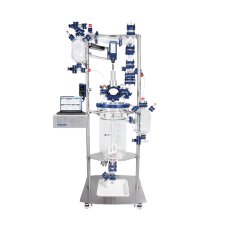
A laboratory reactor
is a versatile piece of equipment used in chemical, pharmaceutical, and
materials science research to conduct controlled chemical reactions. These
reactors are designed to handle a wide range of conditions, including varying
temperatures, pressures, and reaction scales. Below is an overview of key
aspects of laboratory reactors:
### *Types of
Laboratory Reactors*
1. *Batch Reactors*:
- A closed system where reactants are
loaded, the reaction proceeds, and products are removed after completion.
- Suitable for small-scale experiments and
research.
2. *Continuous
Stirred-Tank Reactors (CSTR)*:
- Reactants are continuously fed into the
reactor, and products are continuously removed.
- Ideal for steady-state studies and kinetic
analysis.
3. *Flow Reactors*:
- Reactants flow through a tube or channel,
allowing for precise control of reaction time and conditions.
- Commonly used for high-throughput
screening and process optimization.
4. *Microreactors*:
- Miniaturized reactors for small-volume
reactions, offering excellent heat and mass transfer.
- Useful for hazardous or highly exothermic
reactions.
5. *Photochemical
Reactors*:
- Equipped with light sources to drive
photochemical reactions.
- Used in studies involving light-sensitive
reactions.
6. *Electrochemical
Reactors*:
- Designed for reactions involving electron
transfer, such as electrolysis or fuel cell research.
### *Key Features of
Laboratory Reactors*
- *Material of
Construction*:
- Glass (for corrosion resistance and
visibility).
- Stainless steel (for high-pressure and
high-temperature applications).
- Specialty alloys (for highly corrosive
environments).
- *Temperature
Control*:
- Heating and cooling systems (e.g., jacketed
vessels, immersion heaters, or cryogenic cooling).
- *Pressure
Control*:
- Pressure vessels with safety valves and
pressure gauges for high-pressure reactions.
- *Mixing and
Agitation*:
- Magnetic stirrers, mechanical stirrers, or
impellers for homogeneous mixing.
- *Monitoring and
Control*:
- Sensors for temperature, pressure, pH, and
other parameters.
- Automated control systems for precise
reaction management.
- *Scalability*:
- Designed to mimic larger industrial
reactors for process development.
### *Applications of
Laboratory Reactors*
- *Chemical
Synthesis*:
- Developing new compounds or optimizing
reaction conditions.
- *Catalysis
Studies*:
- Testing and characterizing catalysts.
- *Polymerization*:
- Producing and studying polymers.
- *Pharmaceutical
Research*:
- Drug discovery and process development.
- *Environmental
Studies*:
- Investigating waste treatment or green
chemistry processes.
### *Considerations
for Selecting a Laboratory Reactor*
1. *Reaction Type*:
- Choose a reactor compatible with the
reaction mechanism (e.g., batch, continuous, or flow).
2. *Scale*:
- Ensure the reactor size matches the
experimental requirements.
3. *Safety*:
- Consider the reactor's ability to handle
hazardous materials or extreme conditions.
4. *Budget*:
- Balance cost with required features and
capabilities.
5. *Ease of Use*:
- Look for user-friendly controls and
maintenance requirements.

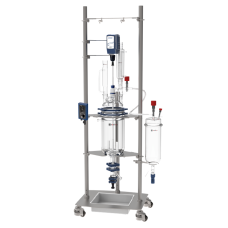
![Adjustable Colony Counter Net Weight:5.2[kg] Model: Galaxy 230 Wiggens Germany](https://labequipment.com.bd/image/cache/catalog/lab_equipment/Weggens Germany/Reactor/adjustable-colony-counter-net-weight52kg-model-galaxy-230-wiggens-germany-228x228.jpg)
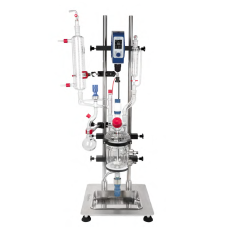


![Stainless steel COD Reactor with Touch button and LED display Heat output [W]:220 Model: WD325 Wiggens Germany](https://labequipment.com.bd/image/cache/catalog/lab_equipment/Weggens Germany/Filtration/stainless-steel-cod-reactor-with-touch-button-and-led-display-heat-output-w220-model-wd325-wiggens-germany-228x228.jpg)